What CRT Does
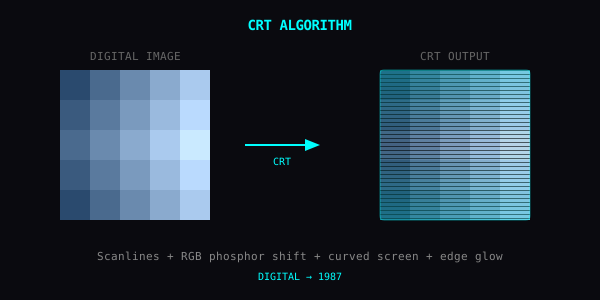
CRT simulates a cathode ray tube display. Three things happen at once:
Scanlines — horizontal dark stripes between every row of pixels
Phosphor bloom — bright pixels glow into their neighbors
RGB sub-pixel shift — red, green, blue phosphors lit slightly apartThe combined effect is the unmistakable look of analog video, before everything was 4K and surgically sharp.
Why It Works on Photos
Modern photos are too clean. Every pixel is exactly where it should be. CRT adds the imperfection your eye associates with "video" — the artifact set that says this was on a screen, not paper.
Suddenly that bright window becomes a glowing rectangle. Skin tones get a slight color separation. Dark areas pick up a glow. It reads as 1987 instead of 2026, and your brain fills in the rest.
Parameters
Intensity (0–100%)
Master dial. Everything else scales with this.
Scanline (0–100%)
0–20%: faint, almost subliminal
20–60%: clearly visible, classic look
60–100%: aggressive, almost interferingBloom (0–100%)
How far bright pixels leak.
Low: clean retro
High: dreamy haze, late-night TV signalGood Subjects
Street photos: instant Liquid Sky / cyberpunk vibe
Night scenes: bloom does heavy lifting on neon and streetlights
Portraits: phosphor shift on skin = unsettling but stylish
Still life with screens: looks like the photo was also shot on a CRTWhat to Avoid
Detailed text: scanlines fight legibility
Already-soft images: bloom on top of bokeh just becomes mush
Pure black backgrounds: nothing to glow, you get scanlines on voidCombinations
CRT + RGB Shift: amplifies the analog feel. Use RGB shift at low intensity, CRT will do most of the work.
CRT + Pixel Sort: melting CRT broadcast. Like a corrupted VHS rip.
CRT + ASCII Art: terminal in a terminal. Cursed and beautiful.The Idea
CRT isn't nostalgia. It's a different optical contract. Pixels become objects instead of math. That's the whole appeal.